Savor legendary schnitzel in historic Viennese restaurants
Discover UNESCO-listed coffee house culture with perfect sachertorte
Explore vibrant farmers markets brimming with centuries of trade
Taste wild foraged bärlauch in charming garden cafés
 Easy difficulty
 Full Day duration
 Any Shoes footwear
 Medium cost
 Walking transport
 Self-guided guide
Why We Love This Trip
Interactive Map
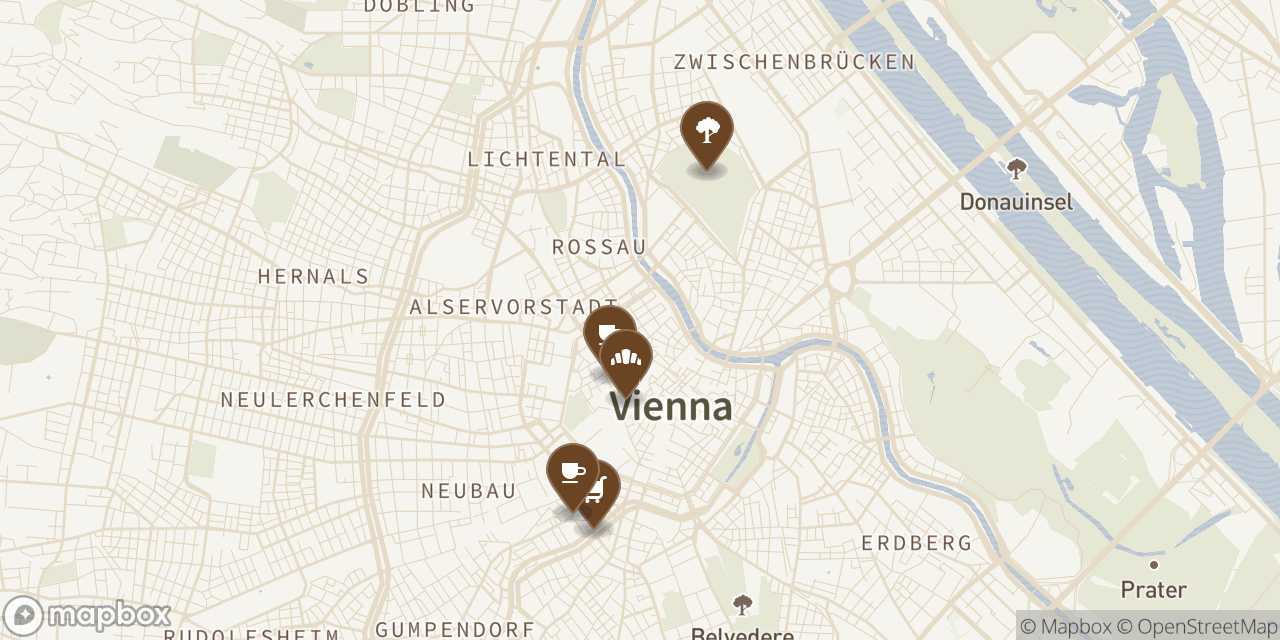
Points of Interest


Your Day Trip Timeline
Start with authentic Wiener Schnitzel at a traditional restaurant
Look for thin, well-tenderized meat with breading that adheres perfectly when you cut into it
Order the classic pork schnitzel with potato salad
Vienna's potato salad features complex vinaigrette and herbs, much more interesting than Bavarian style
Visit Naschmarkt, Vienna's 400-year-old farmers market
Bring cash for everything including toilets, expect crowds especially on weekends, great for people watching
Navigate Naschmarkt's parallel lanes and small connectors
Can feel chaotic and crowded, best experienced by sitting down for a meal rather than just browsing
Stop at Café Sperl for traditional coffee house culture
Founded 1880, UNESCO-listed establishment with piano music, healthy mix of locals and tourists without long lines
Order a Wiener Melange and Einspänner at Café Sperl
Melange is milder cappuccino with half coffee, half steamed milk - Einspänner is mocha with cream
Try the chocolate sponge wafer dessert with your coffee
Features oaty rustic base, chocolate mousse layer, hazelnut notes, and crunchy chocolate top
Walk through Augarten park for bärlauch wild garlic
Spring seasonal ingredient, locals pick it fresh for pesto, adds herby depth to Viennese cuisine
Dine at Augarten restaurant for bärlauch dumplings
Very garlicky in pleasant herby way, watch out for red peppercorns, surprisingly good casual meal
Get Sachertorte at Café Central or Café Demel
Rich chocolate layer cake with thin jam center - Demel requires waiting in line but has exceptional quality
Ben's Deep Dive
Vienna's culinary identity runs far deeper than schnitzel and sachertorte, rooted in a 400-year-old market tradition, UNESCO-protected coffee culture, and seasonal ingredients like wild garlic that most visitors completely overlook.
The Naschmarkt, Vienna's oldest and most popular farmers market, has served as the city's culinary heartbeat for approximately 400 years. Its location along the Danube River positioned it as a massive historical center of trade, creating an unparalleled selection of goods that extends far beyond typical market fare—fresh produce, meats, cheeses, and countless restaurants packed into parallel lines of small stalls connected by narrow passageways. While the market's bones are genuinely stunning and the food offerings look incredible, the reality of visiting requires a more nuanced perspective than most travel guides provide. Penned in by two major busy roads and absolutely packed with visitors (many inexplicably dragging rolling suitcases through the chaos), the atmosphere teeters on that line of unbearably chaotic unless you have something specific to do there. Cash is king here—restaurants and even toilets require coins, so credit cards won't help you navigate this bustling maze. The market works best when you interact with it rather than merely look at it: sit down for a full meal, grab a snack, people-watch as all of Vienna passes by. It's the exact kind of place that suffers from being on everyone's generic bucket list, yet still offers genuine value if approached with the right expectations and hungry stomach.
What truly distinguishes Vienna's food culture, however, is its UNESCO-recognized coffee house tradition—a living, breathing cultural heritage that remains vibrant rather than museum-like. Café Sperl, founded in 1880, exemplifies this perfectly: live piano music fills the air on a Saturday at 1pm, yet there's no line out the door, with a healthy mix of tourists and locals occupying tables while spare seats remain available. This establishment has served as a crossroads of perspectives for over a century, with famous artists and military personnel all congregating under one roof. The Wiener Melange—essentially a milder cappuccino made with half a cup of coffee and steamed milk—delivers that perfect balance where initial bitterness gives way to smooth milk, creating something you wish came in triple the size. The Einspänner, a mocha with cream that requires mixing before drinking to avoid getting it all over your nose, showcases the attention to presentation that makes these coffee houses special. Beyond the beverages, desserts like the chocolate sponge wafer creation with its oaty, rustic base, chocolate mousse top, and crunchy chocolate piece reveal the depth of Vienna's pastry tradition—though perhaps not as universally beloved as the city's most famous export.
The iconic Sachertorte remains Vienna's most contested dessert, with debate swirling around which café created the original. This rich, chocolatey, almost fudgy layer cake with a thin slice of jam right in the middle represents near-dessert perfection for many palates. Café Demel claims home to the original sachertorte and delivers a version so memorable it warrants thinking about almost daily, despite requiring a wait in line. Café Central offers a solid alternative without the queue, serving constituent parts of really high quality that come together smoothly, though the cake runs slightly dry and doesn't quite reach the heights of Demel's version. For first-time visitors, waiting in the line at Demel might be worthwhile, while repeat visitors can confidently explore other establishments knowing that even the less exceptional sachertortes in Vienna remain fantastic. The beautiful thing about Vienna's café culture is that the ambiance, coffee quality, and overall experience often matter just as much as the specific slice of cake on your plate.
Perhaps the most overlooked aspect of Viennese cuisine is the role of hyperlocal, seasonal ingredients like Bärlauch—wild garlic that grows abundantly in inner-city parks like the Augarten. In spring, locals venture into these green spaces to pick it fresh, bringing it home to make pesto or incorporate it into their cooking, adding an extra level of depth that makes potato salads and other dishes so distinctly tasty. This cultural staple, with its wonderful herby garlic flavor that can only come from fresh wild garlic, appears in restaurants throughout the city yet rarely gets mentioned in travel vlogs or traditional guides. The red pepper corn can be intense, but without it, the bärlauch shines through in that really nice herby way. Finding dishes featuring this seasonal ingredient, whether at the restaurant in the Augarten or elsewhere, provides insight into how Viennese cuisine connects to the land and seasons in ways that schnitzel and sachertorte simply cannot. This attention to local, foraged ingredients represents the living, evolving side of Vienna's food culture—one that rewards curious eaters who venture beyond the obvious tourist highlights to discover what locals actually seek out and celebrate.
Support Us
Plan Your Trip
Get personalized recommendations and custom itineraries for your Munich adventure. Whether you need help planning the perfect day trip, finding hidden gems, or creating a multi-day itinerary, we're here to make your Munich experience unforgettable.
| Consultation | Time |
|---|---|
| Quick Q&A | 20 min |
| Tailored Consultation | 45 min |
Join Our Tours
Experience Munich like a local with our personalized walking tours and full-day adventures! From hidden gems to local favorites, we'll show you the authentic side of Munich that most tourists miss.