Wander ghostly Roman streets beneath opulent Habsburg grandeur
Descend into plague pits beneath Gothic cathedral spires
Experience world-class opera in Beethoven's creative home
Picnic beneath WWII towers where children fly kites
 3 Days length
 Easy difficulty
 Train transport
 Walking shoes
 Medium cost
 Busy crowds
Why We Love This Trip
Interactive Map
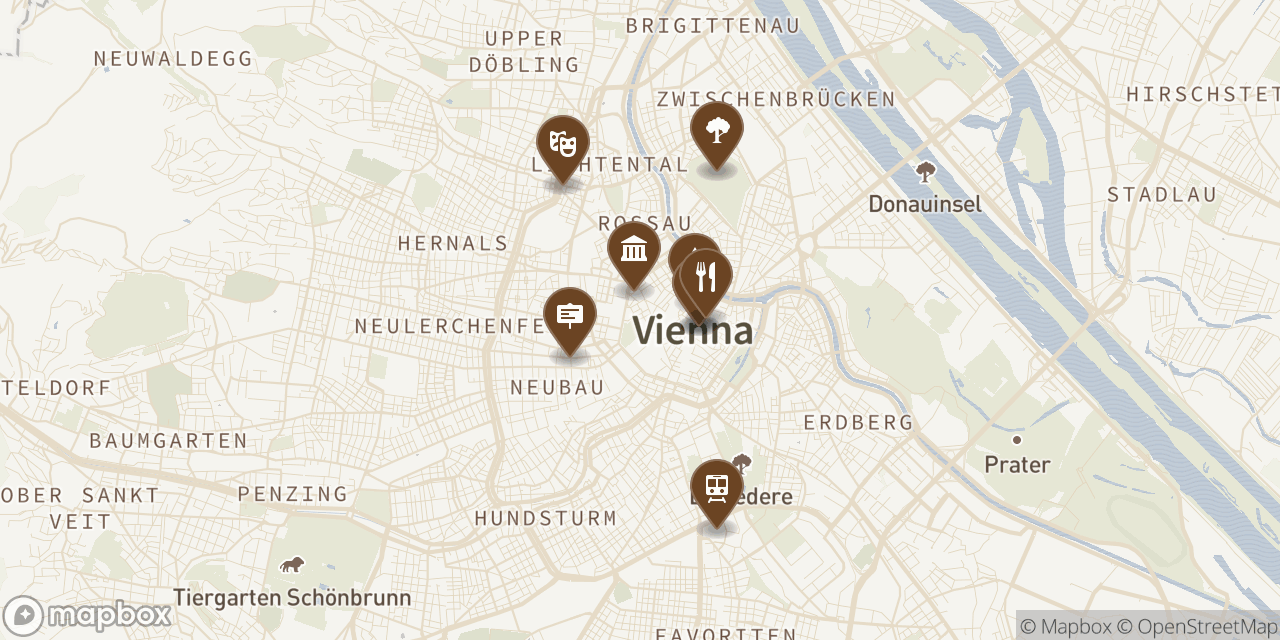
Points of Interest


Your Day Trip Timeline
Arrive in Vienna by train from Munich
Direct connection takes about 4 hours - purchase 72-hour public transit pass immediately upon arrival
Walking tour of the Altstadt Old Town
Explore opulent streets, covered passages called Durchgänge, and zone-marked street signs - incredibly walkable
Visit Roman ruins archaeological site in city center
See 2,000 years of history layered together - streets still follow ancient Roman encampment routes
Explore St. Stephen's Cathedral exterior and tiled roof
Gothic masterpiece with stunning ceramic roof tiles - central landmark of Vienna's old city
Take the Catacombs guided tour beneath cathedral
Spooky experience with 11,000 burials in 30 grave rooms plus plague victims chamber - purchase tickets in advance
Visit Pasqualati House Beethoven Museum
Located in regular apartment building where he composed Symphonies 5, 7, 8 and Für Elise - best for music history enthusiasts
Attend performance at Volksoper opera house
More affordable than main opera venues - check if German subtitles or English available when booking tickets
Explore Auer Garden park and WWII Flak Towers
Surreal family-friendly park with massive 1942 concrete defense towers - residential neighborhood with locals enjoying green space
Walk forest trails between radar and gun towers
Peaceful wooded paths create surprising contrast with historical structures - feels like Bavarian hiking within the city
Have lunch at Restaurant Figlmüller for traditional schnitzel
Famous schnitzel house requiring reservations - try classic Wiener Schnitzel with potato salad and mustard
Ben's Deep Dive
Beyond Vienna's imperial façades lies a complex history written in everything from ancient Roman routes still ghosting beneath modern streets to seemingly indestructible wartime towers that now watch over children flying kites—a city that refuses to erase its past, choosing instead to live alongside it.
What many visitors don't realize is that Vienna's walkable streets follow a nearly 2,000-year-old blueprint. The Roman military encampment of Vindabona, established along the Danube frontier, wasn't particularly noteworthy in its time—certainly not compared to grander Roman cities further south. Yet its footprint persists in ways both visible and hidden. Throughout the Altstadt, small archaeological pits reveal this layered history: Renaissance walls built atop Roman foundations, 18th-century construction mixed with ancient brick, all compressed together in the dirt like a geological record of human ambition. The high streets themselves are theorized to trace the original Roman road network, meaning modern visitors unknowingly walk the same routes as legionaries did two millennia ago. It's a fascinating example of urban continuity, where the city simply built upward and onward rather than clearing away what came before. This means there's likely an enormous archaeological treasure still buried beneath Vienna's cobblestones—one we'll probably never fully excavate because the city above is far too valuable to disturb.
This philosophy of preservation through adaptation extends even to Vienna's most uncomfortable historical remnants. The Flak towers in the Augarten represent perhaps the most striking example of this approach. Built rapidly in 1942 with walls 3.5 meters thick, these massive anti-aircraft fortifications were designed as land battleships to defend Vienna from Allied bombing raids. Their near-indestructible construction meant that after the war ended, demolition simply wasn't practical—so they remained. Today, one has been converted into an aquarium, while the others stand in parks where families picnic, children learn to fly kites, and teenagers play basketball in their shadows. The dissonance is profound: these monuments to wartime violence now anchor peaceful neighborhood green spaces. For visitors from countries where such structures might be hidden or demolished, the experience of eating lunch beneath a Flak tower while watching everyday Viennese life unfold can feel surreal. Yet this is precisely Vienna's approach to history—not erasing the uncomfortable parts, but integrating them into daily life as permanent reminders.
The city's musical heritage operates on a similar principle of authentic preservation rather than sanitized tourism. During the mid-18th to mid-19th centuries, Vienna established itself as the undisputed center of European classical music, drawing composers from across the continent to the capital of the Austro-Hungarian Empire. The result is that dozens of actual residencies where Beethoven, Mozart, and Schubert lived and worked have been converted into museums. The Pasqualati House, where Beethoven composed his Fifth, Seventh, and Eighth Symphonies, as well as the opera Leonora and Für Elise, remains an ordinary apartment building. Visitors climb regular staircases past current residents' doors—it still smells like someone's cooking pizza—to reach rooms where some of Western music's most influential works were written. The museum itself is sparse, with few artifacts, making it most valuable for those with substantial music history knowledge who can appreciate the significance of the space itself. This lack of theatrical presentation might disappoint some visitors, but it's refreshingly honest—these weren't purpose-built monuments, they were working apartments where artists happened to create masterpieces.
Even Vienna's approach to making high culture accessible reflects this practical, un-pretentious philosophy. The Volksoper offers performances at a fraction of what similar venues charge elsewhere, bringing opera to regular residents rather than exclusively to wealthy tourists. The experience requires some preparation—not all performances include English subtitles, so visitors might find themselves practicing their German comprehension skills—but the quality rivals far more expensive productions. Combined with the city's exceptional walkability, its zone-numbered street signs for easy orientation, and charming public infrastructure like dog-friendly water fountains scattered throughout the streets, Vienna emerges as a massive metropolis that somehow remains manageable and welcoming. It's this combination of accessible imperial grandeur, unflinching historical honesty, and everyday livability that creates Vienna's unique character—a city that invites you to walk Roman roads, confront uncomfortable history, stand in Beethoven's workspace, and enjoy world-class culture, all while feeling like you're experiencing something authentic rather than performing tourism.
Support Us
Plan Your Trip
Get personalized recommendations and custom itineraries for your Munich adventure. Whether you need help planning the perfect day trip, finding hidden gems, or creating a multi-day itinerary, we're here to make your Munich experience unforgettable.
| Consultation | Time |
|---|---|
| Quick Q&A | 20 min |
| Tailored Consultation | 45 min |
Join Our Tours
Experience Munich like a local with our personalized walking tours and full-day adventures! From hidden gems to local favorites, we'll show you the authentic side of Munich that most tourists miss.