Taste legendary soup-filled dumplings in their birthplace
Discover wine where humanity first fermented grapes
Sample herbaceous Georgian sodas rivaling Coca-Cola's history
Feast on cheese-boat bread dripping with butter
 Easy difficulty
 Full Day duration
 Low cost
 Any Shoes footwear
 Self-guided guide
 Year-round season
Why We Love This Trip
Interactive Map
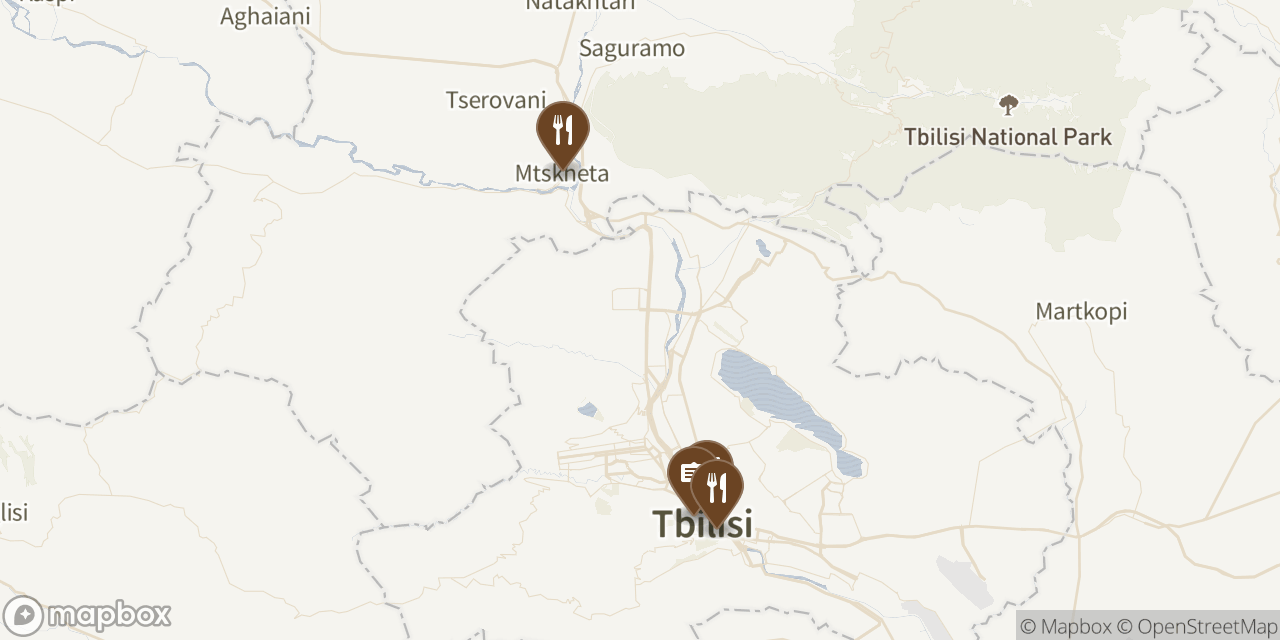
Points of Interest


Your Day Trip Timeline
Start at Orbeliani Bazaar food hall
Second floor entrance separate from supermarket below - modern food court with traditional Georgian stalls
Order khinkali dumplings at the bazaar
Try truffle-cheese and traditional meat versions - nibble corner first, slurp soup, skip the handle
Get khachapuri bread boat with eggs and cheese
Don't use utensils - tear off bread pieces and dip into melted cheese, butter, and egg mixture
Try Tarkhun tarragon lemonade at bazaar drink stand
Georgia's original Soviet-era soda from 1880s - herby, sweet, sharp flavor rivals Coca-Cola history
Visit top-rated khinkali restaurant for proper soupy dumplings
Order all three varieties - meat, cheese, and potato - meat version has most authentic soup-filled experience
Sample Georgian beer with your dumplings
Local lagers are sweeter and lighter than European equivalents - proper half-liter servings available
Return to Orbeliani Bazaar for Georgian wine tasting
Archaeological evidence shows Georgia invented wine 8,000 years ago - try both house white and sweet reds
Find fresh juice stands in Old Tbilisi side streets
Half pomegranate, half orange combo recommended - incredibly tart and fresh-pressed while you wait
Visit Kaala Restaurant in Mtskheta, 20km north
Traditional Georgian lunch with Kura River views - try pkhali walnut dip, Georgian cheese varieties, fish in parchment
Late dinner at Restaurant Pasanauri in Sulfur Spa District
Open until midnight, locals-packed authentic spot - mushroom khinkali for vegetarians, multiple khachapuri varieties available
Ben's Deep Dive
Archaeological evidence reveals that Georgia's wine tradition stretches back over 8,000 years, making it the birthplace of wine itself—but the story of how fermented grapes were first discovered in the Caucasus mountains is just the beginning of this country's remarkable culinary heritage.
The story of Georgian cuisine begins not in a kitchen, but deep in the earth. In the southern Caucasus mountains, ancient humans stumbled upon something extraordinary: grapes gathering in pits and naturally fermenting into what would become the world's first wine. This wasn't just a happy accident—it was a discovery that would shape Georgian culture for millennia. Archaeologists have found earthenware vessels specifically crafted for intentional grape fermentation, and remarkably, nowhere else on Earth has been discovered with wine as old as Georgia's. This 8,000-year tradition runs so deep that home winemaking remains incredibly popular today, with locals often serving their own house wines to guests during tours—wine quite literally made in their own homes. The Georgian approach to winemaking also reveals something fundamental about the culture: while American soda traditions in the late 1800s focused on creating entirely new flavor combinations (think Dr. Pepper's quest to evoke the soda fountain without any individual element), Georgian beverage traditions emphasized capturing and enhancing pure, natural flavors. This philosophy extends beyond wine to their famous tarragon lemonade, invented by a Tbilisi pharmacist in the late 1880s—almost simultaneously with Coca-Cola's creation in Atlanta. Under Soviet rule, this herby, sharp, incredibly sweet soda became mass-produced as the de facto rival to American Coca-Cola within the union, since Western sodas weren't available. The result is a beverage so distinctly different from Western sodas that it challenges everything you think you know about carbonated drinks.
Understanding khinkali—those legendary soup-filled dumplings—requires knowing that they're not simply dumplings with soup added. The magic happens during cooking: the filling and seasonings create their own broth inside the dumpling wrapper as it steams, essentially cooking a soup within the dumpling itself. This explains why different fillings produce varying levels of soupiness—meat-filled khinkali at traditional spots tend to be incredibly soupy with broth literally gushing out when you nibble the corner, while cheese and truffle versions might be more modestly filled. The proper eating technique involves holding the dumpling by its twisted top handle (which serves as a built-in grip), nibbling off a small corner like a hamster, slurping out the hot broth, then devouring the rest—though locals typically discard the handle itself. At places like Restaurant Pasanauri in the historic sulfur spa district, midnight diners—often fresh from the hot springs—pack the restaurant for these dumplings alongside every variation of khachapuri imaginable. The mushroom-filled dumplings offer vegetarians a chance to experience this tradition, and indeed, Georgian cuisine surprises many visitors with its abundance of vegetarian options, from the truffle-cheese combinations available at modern food halls to pkhali, those excellent traditional dips made of minced vegetables bound together with ground walnut puree.
The Oghani Bazaar represents modern Tbilisi's food scene perfectly—a sleek, contemporary food hall that's genuinely popular with locals rather than being a tourist trap. Located confusingly on the second floor of a building (with a completely separate supermarket on the first floor and no internal connection between them), this space showcases how Georgian food culture balances tradition with contemporary presentation. Here you'll find vendors serving everything from khachapuri—that messy, glorious bread boat filled with cheese, butter, and a fried egg that you eat by tearing off pieces of bread and dipping them into the molten center—to multiple khinkali vendors offering different regional styles and fillings. The etiquette matters: using a fork and knife for khachapuri marks you as a tourist, while the proper method involves getting your hands delightfully messy as you tear and dip. The bazaar also houses those famous juice stands, where vendors fresh-press combinations like half pomegranate and half orange, creating intensely tart, elevated drinks that make you wonder why this isn't standard everywhere.
Beyond Tbilisi proper, the culinary tradition continues in places like Mtsketa, just 20 kilometers north, where restaurants like Karaa serve traditional Georgian feasts with stunning views of the Kura River. Here, the full breadth of Georgian cheese-making becomes apparent: from Tenili string cheese to regional Imeruli to Sulguni (similar to mozzarella), each with distinct textures and flavors. These meals showcase the structure of traditional Georgian dining—starting with cheese and pkhali spreads, moving through fresh salads and fish dishes, all accompanied by that fluffy, essential Georgian bread that serves as both utensil and complement to every dish. What emerges from exploring Tbilisi's food scene is a cuisine that has remained distinctly itself despite centuries of outside influence, from Persian and Ottoman to Russian and Soviet. The food tells the story of a culture that discovered wine before anyone else, that values natural flavors enhanced rather than obscured, and that still gathers at midnight after the sulfur baths to tear into dumplings and cheese boats with their hands—exactly as generations have done before.
Support Us
Plan Your Trip
Get personalized recommendations and custom itineraries for your Munich adventure. Whether you need help planning the perfect day trip, finding hidden gems, or creating a multi-day itinerary, we're here to make your Munich experience unforgettable.
| Consultation | Time |
|---|---|
| Quick Q&A | 20 min |
| Tailored Consultation | 45 min |
Join Our Tours
Experience Munich like a local with our personalized walking tours and full-day adventures! From hidden gems to local favorites, we'll show you the authentic side of Munich that most tourists miss.