Taste soup-filled dumplings born from ancient Georgian tradition
Sip wine from humanity's oldest winemaking culture
Savor cheese-boat bread dripping with butter and eggs
Discover the Soviet rival to Coca-Cola's empire
 Easy difficulty
 Full Day duration
 Any shoes
 Medium cost
 Self-guided guide
 Moderate crowds
Why We Love This Trip
Interactive Map
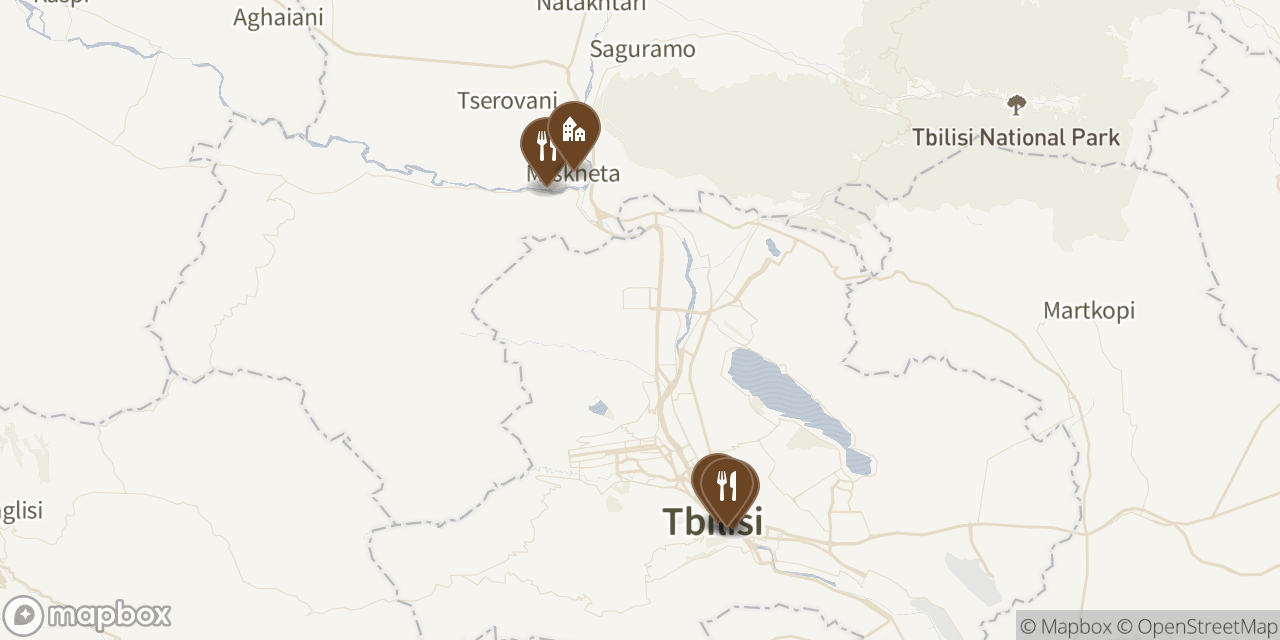
Points of Interest


Your Day Trip Timeline
Start at Orbeliani Bazaar food hall
Supermarket on first floor, bazaar entrance on second - don't walk into wrong entrance like everyone does
Order khinkali dumplings at food stall
Try truffle-cheese or traditional meat filling - these are less soupy than authentic versions but still delicious
Get khachapuri bread boat with cheese and egg
No fork and knife needed - tear off bread pieces and dip into cheese, butter, and egg mixture
Try Tarkhun tarragon lemonade at bazaar drink stand
Georgia's answer to Coca-Cola from 1880s, bright green herbal soda - unique sharp and sweet flavor
Visit highly-rated khinkali restaurant for authentic soupy dumplings
Order meat, cheese, and potato varieties - these have much more broth inside than food hall versions
Nibble corner and slurp soup from khinkali properly
Bite small hole like a hamster, drink the broth, then eat the dumpling - leave the handle behind
Return to Orbeliani Bazaar for Georgian wine tasting
Georgia is birthplace of wine dating back 8,000 years - try both red and white house varieties
Stop at street juice stand in Old Town
Order fresh-pressed pomegranate-orange juice mix - incredibly tart and refreshing, avoid pushy vendors
Day trip to Mtskheta town, 20km north
Visit Karvasla restaurant for traditional Georgian lunch with Kura River views and regional cheese varieties
Try pkhali vegetable-walnut dip with Georgian bread
Traditional minced vegetables bound with ground walnut puree - spread generously on fluffy bread
Dine at Pasanauri restaurant in Sulfur Spa District
Open until midnight, authentic local crowd, excellent mushroom khinkali for vegetarians - went back four times
Sample all khachapuri variations throughout trip
Different regions have unique styles - Adjarian boat-shaped is most photogenic with egg and butter pool
Ben's Deep Dive
Georgia's 8,000-year-old winemaking tradition isn't just cultural heritage—it's the birthplace of wine itself, where archaeological evidence reveals humanity first discovered fermentation in earthenware vessels buried in the southern Caucasus mountains.
The story of Georgian wine is quite literally the story of wine itself, and understanding this fundamentally changes how you experience drinking in Tbilisi. Archaeological evidence discovered throughout Georgia reveals that the world's first wine originated here in the southern Caucasus mountains, where ancient peoples learned to harness fermentation by storing grapes in earthenware vessels called qvevri. These weren't just storage containers—they were intentional fermentation chambers that would be buried in pits where grape residue would naturally ferment, leading humans to discover this transformative process. Nowhere else on Earth has been discovered with wine evidence as old as Georgia's, making every glass you drink here a direct connection to humanity's oldest relationship with viticulture. What makes this particularly fascinating is how Georgian wine culture developed completely independently from the French, Italian, and other European traditions we typically associate with fine wine, yet the quality rivals anything you'd find in Bordeaux or Tuscany. The house wines served in casual restaurants and food halls showcase incredibly sweet flavor profiles unlike typical European wines, and home-growing remains so popular that you'll often be served literal house wine—possibly made in someone's bathtub—on various tours around the city. The toasting tradition adds another layer of meaning to Georgian wine culture, where having someone at the head of the table showing appreciation for guests, friends, good food, and good drink isn't optional but essential to the dining experience.
Beyond wine, Georgia's culinary identity reveals itself through the philosophy of capturing pure, natural flavors rather than inventing new ones. This became strikingly apparent when comparing tarragon lemonade—invented by a Tbilisi pharmacist in the late 1880s almost simultaneously with Coca-Cola in Atlanta—to American soda traditions. While Dr. Pepper famously wanted to evoke the soda fountain without any individual element within it, creating entirely new flavor combinations, Georgian soda tradition focused on enhancing and capturing the essence of tarragon itself. This herby, sharp, incredibly sweet yet balanced drink became the de facto beverage and rival to Coca-Cola within the Soviet Union, precisely because it represented something fundamentally different from American soda philosophy. The same principle applies to Georgian cuisine more broadly—the goal isn't fusion or reinvention but rather perfecting techniques that allow ingredients to express their truest flavors. The khinkali dumpling exemplifies this perfectly, as the soup isn't added to the dumpling but rather cooks and develops within it, creating that soupy mixture as the dumpling itself cooks. This technique-driven approach means the filling and broth become inseparable, unlike Chinese dumplings or Italian ravioli where components remain distinct.
The vegetarian options throughout Georgian cuisine deserve particular attention because they're not afterthoughts but central to the culinary tradition. Pkhali, the traditional dip made from minced vegetables bonded with ground walnut puree, represents such an essential part of Georgian dining that it's worth risking a minor nut allergy to experience—the combination of fresh vegetables and rich walnut creates something that simply doesn't exist in Western cuisine. When spread over fluffy Georgian bread, it provides the same satisfaction as any meat dish while showcasing the sophisticated vegetable-forward cooking that predates modern plant-based trends by millennia. The fresh-pressed juice stands throughout Old Tbilisi, particularly the half-pomegranate, half-orange combinations, further demonstrate how Georgians elevate simple ingredients through perfect execution and combination. The tart aftertaste and elevated flavor profile make you wonder why this hasn't become standard everywhere, though perhaps that's part of what makes discovering it in Tbilisi so special. Regional cheeses ranging from tanelli string cheese to emti to mozzarella-like sulguni create a cheese lover's paradise that extends far beyond the melted versions in khachapuri, while Georgian salads and fish baked in parchment paper provide lighter counterpoints to the rich, dairy-heavy dishes.
What truly distinguishes Tbilisi's food scene is how it remains genuinely local despite increasing tourism and international influence. Midnight Georgian taverns like Pasanauri in the historic spa district serve as real gathering places for locals finishing their evening at the sulfur baths, where you'll hear barely a word of English except from servers patiently walking tourists through menus filled with unfamiliar dishes. The fact that mushroom-filled khinkali exist specifically for vegetarians, that home-pressed wine gets freely shared on tours, and that food halls can serve truffle-cheese dumplings alongside completely traditional preparations shows a cuisine confident enough to evolve without losing its soul. Whether you're breaking bread Georgian-style without utensils, discovering that the dough pocket's 'handle' on khinkali is actually worth eating despite tradition, or learning proper toasting etiquette from locals, the food culture here invites participation rather than observation. This isn't a destination where you admire culinary techniques from afar—it's where you nibble dumplings like a hamster, risk walnut allergies for exceptional pkhali, and connect directly with the place where humans first transformed grapes into wine eight thousand years ago.
Support Us
Plan Your Trip
Get personalized recommendations and custom itineraries for your Munich adventure. Whether you need help planning the perfect day trip, finding hidden gems, or creating a multi-day itinerary, we're here to make your Munich experience unforgettable.
| Consultation | Time |
|---|---|
| Quick Q&A | 20 min |
| Tailored Consultation | 45 min |
Join Our Tours
Experience Munich like a local with our personalized walking tours and full-day adventures! From hidden gems to local favorites, we'll show you the authentic side of Munich that most tourists miss.