Wander cobblestone streets in an authentic medieval village
Hike to three stunning castle ruins above vineyards
Savor Alsatian cuisine where French and German flavors merge
Escape crowds while exploring a fairy-tale hidden gem
 Moderate difficulty
 3km distance
 300m elevation
 Hiking shoes
 Full Day duration
 Train+Bus transport
Why We Love This Trip
Interactive Map
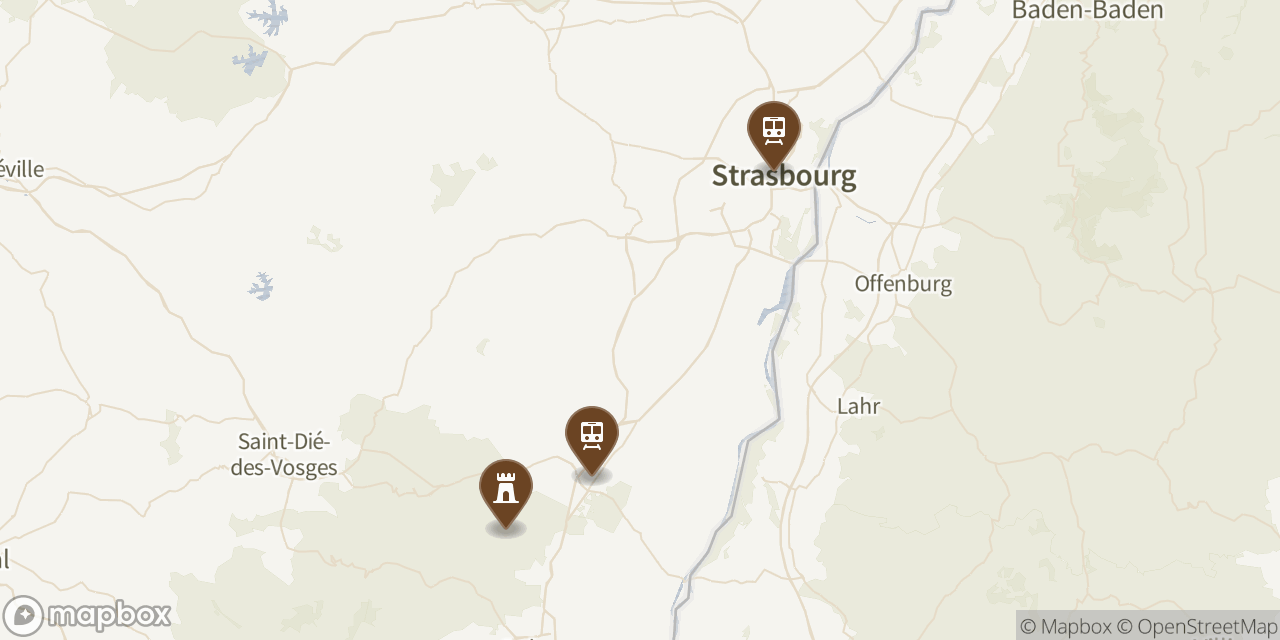
Points of Interest


Your Day Trip Timeline
Take train from Strasbourg to Sélestat
18-minute comfortable ride from Strasbourg central station, trains run regularly throughout the day
Connect to bus from Sélestat to Ribeauvillé
Quick 5-minute connection time at station, bus stop is easy to find near train platform
Explore Ribeauvillé's medieval town center
Dating back to 800s with fortifications from 1300s, streets labeled in both French and German
Walk the medieval town walls and vineyard path
Stunning fortification walls next to Rhine region vineyards, classic Alsatian scenery and photo opportunities
Visit local biscuit shop for hiking snacks
Unique specialty biscuit shop with pistachio and chocolate varieties, perfect provisions for castle hike
Lunch at traditional Alsatian restaurant
Try käsespätzle with crispy bacon or spätzle with mushroom cream sauce, excellent German-French fusion cuisine
Start castle hike from town walls
3km trail with 300m elevation gain, moderately steep start, wear proper footwear and bring water
Visit Château de Weckmund first (smallest castle)
Impressive pentagonal keep on cliff edge with views toward larger castles, save best for last
Explore Château de Saint-Ulrich ruins
Best preserved castle in region, 500 years of construction from 1100s-1600s, stunning Romanesque architecture
Admire the Romanesque great hall and bifurcated windows
Double-arched reading nook windows throughout hall, beautiful pink sandstone construction still remarkably intact
Climb the tower for panoramic valley views
Wooden stairs inside tower lead to top, railings provided, sweeping views of three distinct Alsatian towns
Return via same route to Ribeauvillé
Easier descent back through Mediterranean-feeling trail, catch bus and train connection back to Strasbourg
Ben's Deep Dive
Ribeauvillé's story is one of remarkable cultural fusion and architectural preservation, where centuries of French-German heritage blend seamlessly into one of Europe's most authentic medieval experiences.
What makes Ribeauvillé truly exceptional isn't just its stunning medieval architecture—it's the living testament to 500 years of continuous cultural evolution that you can still experience today. The town's origins stretch back to the 800s, but the fortifications and half-timbered houses that create that "theme park" level of beauty mostly date from the 1300s onward. This wasn't a town frozen in time and later restored; it's a place that simply never stopped being itself. The bilingual street signs throughout town—displayed in both French and German—aren't a modern tourist affectation but rather an authentic reflection of the region's complex identity. This is Alsace, where cultural mixing isn't history, it's daily life. The famous storks nesting throughout the village aren't just charming wildlife; they're symbols of the region itself, returning year after year to the same nests, much like the traditions that have remained constant despite centuries of border changes.
The culinary scene here represents something deeper than just excellent food—it's gourmet cultural fusion at its finest. The käsespätzle served in local restaurants showcases this perfectly: it's a dish with clear German roots (those rustic egg noodles are ubiquitous in southern Germany and Austria), but prepared with an Alsatian touch that elevates it beyond its Bavarian cousins. The bacon achieves that perfect crispy texture, the cheese selection is more refined, and even vegetarian options like the cream and mushroom spätzle demonstrate a sophistication that makes this cuisine "just a little bit more gourmet" than traditional German fare. The artisan biscuit shops scattered through town aren't modern additions—they're part of a long tradition of Alsatian confectionery excellence, the kind of specialized craftsmanship that thrives in towns with centuries of unbroken community identity. These aren't pastries designed for tourists; they're treats that locals have been perfecting for generations.
The hike to Château de Saint-Ulrich offers more than just exercise and views—it's a journey through geological and architectural history. The 3-kilometer trail (with 300 meters of elevation gain) winds through terrain that feels distinctly Mediterranean rather than Alpine, a surprising microclimate that supports different vegetation than the pine forests of nearby Bavaria. The sandstone used throughout the castle construction gives the ruins that distinctive pinkish hue, reminiscent of other Rhine Valley castles like Heidelberg. What makes Saint-Ulrich architecturally significant is that continuous 500-year construction period, from the 1100s through the 1600s, which created a rare showcase of evolving medieval architecture. The Romanesque hall with its beautifully simple bifurcated windows—those doubled reading nook windows with built-in benches—represents early medieval design philosophy, while later Gothic and Renaissance additions show how castle architecture evolved over half a millennium. The smaller Château de Dagsbourg, despite playing "second fiddle," demonstrates impressive medieval engineering with its pentagonal keep perched dramatically on the cliff edge.
Perhaps the most remarkable aspect of Ribeauvillé is what you don't see from those castle vistas: suburban sprawl. Looking down from the tower at Saint-Ulrich, you can identify three distinct towns maintaining their individual identities rather than blurring into endless development. This commitment to preservation—both architectural and cultural—is what makes the Alsace region special. It's not a museum, not a theme park, despite how stunningly beautiful it appears. It's a living, breathing example of how European communities can honor their past while remaining vibrant and authentic. The fact that this remains relatively undiscovered by international tourists isn't an accident—it's a testament to how well the region has resisted homogenization. There's no need for manufactured charm when the real thing has been maintained so carefully for over a millennium.
Support Us
Plan Your Trip
Get personalized recommendations and custom itineraries for your Munich adventure. Whether you need help planning the perfect day trip, finding hidden gems, or creating a multi-day itinerary, we're here to make your Munich experience unforgettable.
| Consultation | Time |
|---|---|
| Quick Q&A | 20 min |
| Tailored Consultation | 45 min |
Join Our Tours
Experience Munich like a local with our personalized walking tours and full-day adventures! From hidden gems to local favorites, we'll show you the authentic side of Munich that most tourists miss.