Explore hyper-specific museums strangers never think to visit
Sip traditional Dutch gin with a grumpy bar cat
Discover Amsterdam's strangest art installations and hidden cultural gems
Walk through centuries of death, design, and canal engineering
 Easy difficulty
 Full Day duration
 Any shoes
 Metro/Tram transport
 Medium cost
 Self-guided guide
Why We Love This Trip
Interactive Map
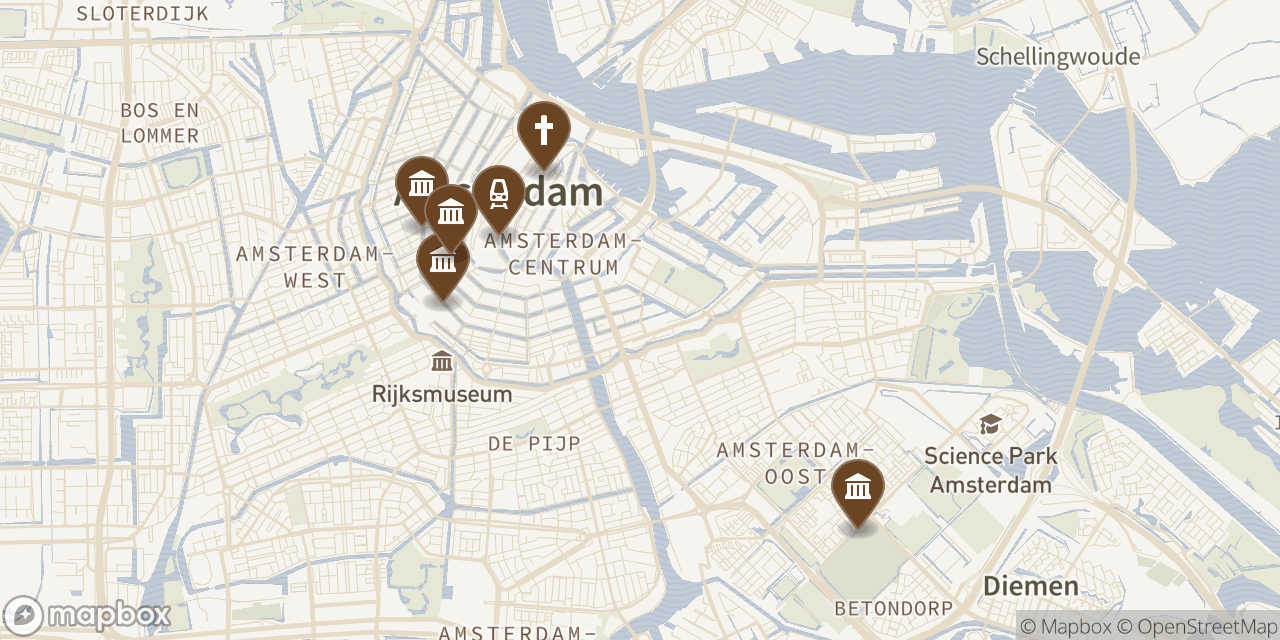
Points of Interest


Your Day Trip Timeline
Start at Oude Kerk in Red Light District
Amsterdam's oldest building from 1200s, now operating as church and contemporary art museum
Explore Oude Kerk's unique dual purpose
Entry 15 euros, active church on Sundays, art installations rest of week with atmospheric ambiance
Look for medieval misericord seats and floor graves
Hand-carved pew seats with unique motifs, floor contains 60,000 graves from 400 years of burials
Visit metro station archaeological displays
Artifacts found during construction displayed along escalators, including giant anchors and historical finds
Use Amsterdam's tap-in transit system
Apple Pay compatible on metro, trams, and buses - tap in and out, very walkable city
Stop by the Tobacco Pipe Museum
Hyper-specific local museum with 2,000 years of pipe history, features medieval clay pipes from Thames
Experience traditional jenever at a local bar
Must sip without touching glass first, try traditional or lemon variety at 30-35% alcohol
Visit Museum Tot Zover at New East Cemetery
Museum of Life and Death showcasing Dutch cultural death practices, hair art jewelry, and historical mourning customs
Browse vintage hand-painted tiles at antique shops
Unique Dutch tiles ranging 50-200 euros each, various art styles and historical periods represented
Tour the 1960s Houseboat Museum
Fully preserved period houseboat with authentic mid-century design, showcases unique Amsterdam water-based living
Explore the Canal Museum for engineering history
Interactive exhibits, historical footage, and diagrams explain Amsterdam's unusual urban planning around waterways
Discover John Adams historical connection
Canal Museum building where second US president arranged loan to establish independent United States
Ben's Deep Dive
From ancient burial practices beneath your feet to peculiar tap-in transit debates, Amsterdam's hidden layers reveal an audacious city that constantly reinvents itself while preserving its wonderfully strange character.
What becomes immediately clear when exploring Amsterdam's overlooked corners is just how comfortable the city has become with its own contradictions. The Oude Kerk exemplifies this perfectly—operating simultaneously as an active church on Sundays and an art museum throughout the week represents a pragmatic Dutch solution to an increasingly secularized world. The Protestant interior, deliberately sparse compared to Catholic churches found elsewhere in Europe, creates an atmospheric canvas that shifts between religious contemplation and contemporary artistic expression. The spooky ambient soundscape of rattling chains and ghostly echoes might feel off-putting at first, but it successfully transforms what could be a sterile historical visit into something genuinely memorable. The admission price of 15 euros does position it as a premium experience, so visitors should understand they're paying not just for the medieval craftsmanship and fascinating misericords carved into the pews, but for the atmospheric concept itself. Those 60,000 graves underfoot—representing roughly 400 years of continuous burials—create an unshakeable sense that you're walking through layers of Amsterdam's history, quite literally standing on the city's past.
The city's obsession with hyper-specific museums speaks to something deeper about Dutch culture—a willingness to take niche interests seriously and give them proper institutional treatment. The Museum of Tobacco Pipe Smoking houses artifacts spanning nearly 2,000 years, from Mesoamerican pipes through European clay examples that were essentially the cigarettes of the Middle Renaissance period. These disposable clay pipes, commonly found through mudlarking in rivers like the Thames or Amsterdam's own canals, represent everyday life from centuries past in a tangible way that grand oil paintings never could. The Museum of Life and Death takes an equally unflinching approach to its subject matter, showcasing Dutch funeral traditions and Victorian hair art with such intricate craftsmanship that some pieces appear painted rather than woven from human hair. This willingness to engage directly with mortality, grief, and remembrance reflects a cultural comfort with topics other societies might find too macabre for museum treatment. Even the jenever bar experience—complete with resident cat Mango and the traditional hands-free first sip—turns drinking into a cultural ritual rather than simple consumption, with the bartender explaining that this 30-35% alcohol spirit represents something more complex and smoky than refined gin.
Perhaps the most audacious element of Amsterdam's character becomes clear at the Canal Museum, which transforms what could genuinely be dry infrastructure history into an immersive exploration of one of Europe's strangest urban planning decisions. While countless cities boast waterfront locations, Amsterdam took the radical step of reorganizing its entire urban structure around canals, turning streets into waterways and boats into everyday transit. The museum succeeds by using modern recreations, historical footage, diagrams, and interactive elements to explain not just how this massive engineering undertaking happened, but why the Dutch looked at their geography and decided to go full canal. The building itself holds historical significance—John Adams, America's second president, arranged a crucial loan here as the first ambassador to the Netherlands, helping establish the independent United States. This layering of history upon history, where a building about water infrastructure also housed revolutionary financial diplomacy, feels quintessentially Amsterdam.
Even Amsterdam's public transit system reveals the city's approach to modernity and preservation. The metro stations double as archaeological exhibitions, displaying artifacts unearthed during construction rather than hiding them away in storage. The tap-in, tap-out payment system using Apple Pay represents the kind of practical innovation that prioritizes efficiency without ceremony—though as with many Amsterdam features, even this generates friendly debate about whether eliminating physical tickets and occasional conductor checks improves or diminishes the experience. The cat rescue houseboat spotted along the canals, the vintage hand-painted tiles in antique shops priced between 50-200 euros each, and the 1960s-era houseboat museum with its period-perfect interior design all contribute to a city that preserves its eccentric character across centuries and aesthetics. Amsterdam doesn't just tolerate its strangeness—it institutionalizes it, celebrates it, and invites visitors to engage with it on a deeper level than surface-level tourism typically allows. This is a city built on audacious decisions, from medieval burial practices to Renaissance-era urban canal construction to contemporary secular art installations in sacred spaces, all coexisting in a landscape that rewards curiosity and punishes assumptions about what a European capital should be.
Support Us
Plan Your Trip
Get personalized recommendations and custom itineraries for your Munich adventure. Whether you need help planning the perfect day trip, finding hidden gems, or creating a multi-day itinerary, we're here to make your Munich experience unforgettable.
| Consultation | Time |
|---|---|
| Quick Q&A | 20 min |
| Tailored Consultation | 45 min |
Join Our Tours
Experience Munich like a local with our personalized walking tours and full-day adventures! From hidden gems to local favorites, we'll show you the authentic side of Munich that most tourists miss.