Discover authentic Slovak flavors at historic monastery breweries
Savor creamy sheep cheese dumplings unlike anywhere else
Explore enchanting Christmas markets serving traditional turbo punch
Experience Renaissance elegance in a museum-like sweet shop
 Easy difficulty
 Full Day duration
 Any Shoes footwear
 Walk transport
 Medium cost
 Self-guided guide
Why We Love This Trip
Interactive Map
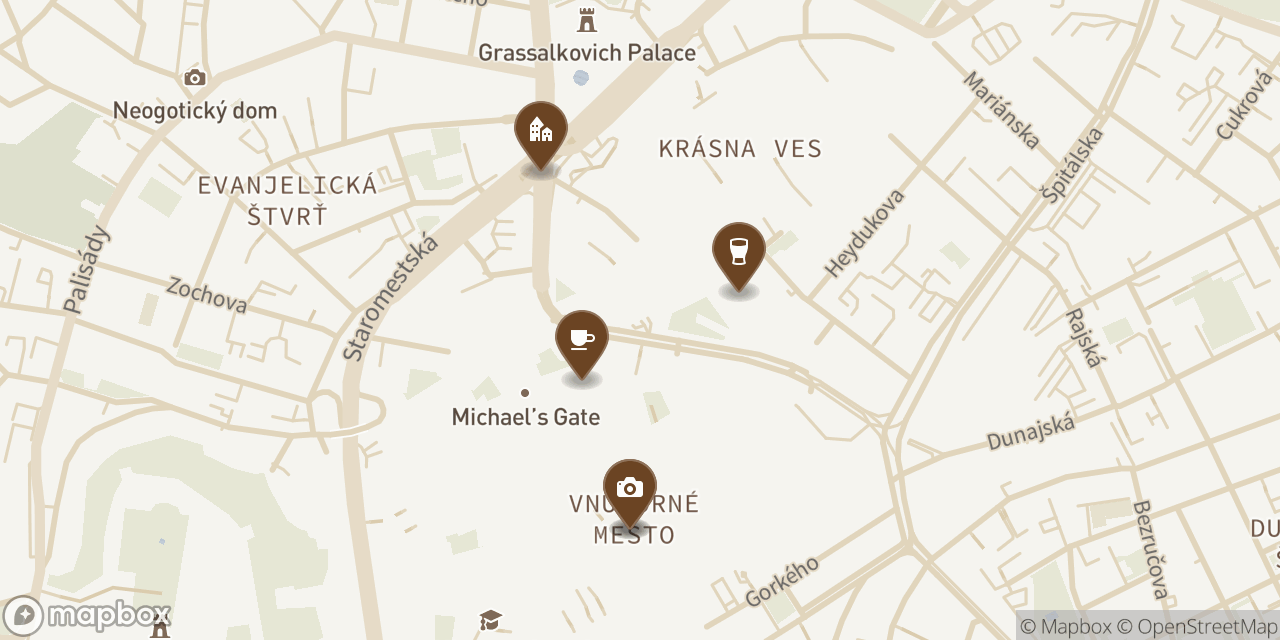
Points of Interest


Your Day Trip Timeline
Start at Shoko Cafe in Main Square
Perfect first stop for coffee and cake, traditional Central European style with chocolate specialties
Order Trdelník (Veternik) pastry and chocolate fondue
Quintessential Central European pastry with buttery dough, cream and caramel - messy but delicious
Walk through Old Town and Christmas Markets
Markets stay open past Christmas (unlike Germany), explore the beautiful historic center between restaurants
Lunch at Flagship Monastic Brewery Restaurant
Try their unfiltered Pilsner-style beer (brewery consecrated 2015) with Slovak cheese plate appetizer
Order the garlic soup in bread bowl
Extremely garlicky with shredded cheese, famous Slovak dish - brush teeth after
Share the Slovak Board for Two
Features sheep cheese pierogi, sauerkraut with bacon, and potato dumplings - mostly vegetarian friendly options
Visit Café Kút (Museum Sweet Shop)
Special occasion cafe with Renaissance frescoes and antique collection, famous swan-shaped trdelník and chocolate apricot cake
Evening at Main Christmas Market
Live music on main stage, almost entirely food-focused with sour cherry wine and Slivovitz turbo punch
Walk to Second Christmas Market
Check out restaurant pop-up kiosks along the way, pistachio liqueur shots available at street stands
Try potato pancakes with cheese and garlic cream
Fusion of Hungarian langos and German kartoffelpuffer, about €5 for two - incredible value
Ben's Deep Dive
Bratislava's culinary scene reflects a fascinating crossroads of Central European influences, where Slovakia's unique identity shines through centuries-old café traditions, monastic brewing heritage, and Christmas market culture that extends well beyond December 25th.
Positioned along the Danube River, Bratislava serves as Slovakia's capital and represents many travelers' first encounter with this often-overlooked country. The city's culinary landscape tells a story of Central European heritage that shares deep connections with its neighbors—particularly the Czech Republic—while maintaining distinctly Slovak flavors and traditions. The sheep cheese that defines so many traditional dishes here offers a tanginess and sharpness unlike the milder cheeses found elsewhere in the region, creating what locals consider an "advanced" but absolutely moorish flavor profile. This unique ingredient appears in everything from the famous sheep cheese perogi (which locals might call dumplings, though they more closely resemble nokedli with potato flour that creates an impossibly melty texture) to traditional cheese plates that pair beautifully with the city's exceptional beers. The cuisine reflects a practical, hearty approach to food—think garlic soup served in edible bread bowls loaded with shredded cheese, or crispy potato preparations covered in garlic cream and mozzarella-style cheese—that has sustained Slovaks through centuries while remaining remarkably affordable, with generous portions costing around €5 compared to €13 for similar dishes in nearby Munich.
The café culture in Bratislava deserves special attention, particularly establishments like Kukumút, affectionately dubbed the "museum sweet shop" by locals. This extraordinary venue took over a decade for its owner to assemble, resulting in a space where Renaissance frescos cover walls and ceilings, antique collections fill every corner, and coffee arrives in gorgeous vintage cups with massive servings of cream. While some might dismiss such places as touristy due to their location off the main square and appearance in guidebooks, this assessment misses the nuance of what makes them special. These aren't everyday cafes for locals—they're special occasion destinations for birthdays, anniversaries, or when visitors come to town. The swan-shaped Veternik pastries served here represent quintessential Central European baking traditions, featuring incredibly light buttery pastry filled with tons of cream and caramel that evoke deep nostalgia for anyone familiar with Czech or Slovak cuisine. This old-school flavor profile, combined with options like ridiculously indulgent chocolate apricot cakes, creates experiences worth seeking out even if they cost a bit more than neighborhood alternatives. The ambiance itself—the frescos, the fine china aesthetic, the careful curation—transforms a simple coffee and cake into something memorable.
Bratislava's brewing heritage adds another dimension to its food scene, with the flagship monastic brewery representing a surprisingly modern addition to the city's centuries-old traditions. Consecrated in 2015, this brewery produces exceptional unfiltered and unpasteurized Pzener-style beers (carefully distinguished from true Pilsner, which can only come from the Czech town itself—a specificity that reflects Slovakia's close cultural ties with its neighbor). Despite being such a young brewery, it stands proudly alongside historic operations, producing sharp, hop-forward, crisp beers that maintain perfect balance even without filtration. The brewery's restaurant showcases how Slovak cuisine combines German, Czech, and Hungarian influences into something distinct—potato-based doughs that differ from the egg noodles common in Munich, preparations featuring sauerkraut that menus diplomatically call "cabbage" for English speakers, and bacon-laden dishes that deliver intensely tangy flavors. These restaurants, despite having picture menus and multiple language translations, maintain authenticity evidenced by the predominance of Slovak conversations among diners.
Perhaps nothing captures Bratislava's unique position better than its dual Christmas markets, which remain open past December 25th when German markets have long since closed. These markets feature live music on main stages, international food stalls offering everything from traditional Slovak dishes to creative fusions, and dangerously smooth beverages like turbo punch made with rum and red wine that disguises its strength beneath fruit flavors. Unlike some tourist-focused markets, these attract genuine local crowds enjoying honey wine, black currant wine, sour cherry wine, and other specialty drinks that showcase regional ingredients. The food offerings extend beyond typical market fare to include restaurant pop-up kiosks serving Christmas market tapas, crispy potato pancakes stacked with garlic cream and cheese for exceptional value, and international options like Korean bao alongside Hungarian-inspired lángos variations. This combination of authentic Slovak culture, international influences, affordable prices, live entertainment, and genuine local participation creates a holiday market experience that feels refreshingly unpretentious while delivering exceptional quality—much like Bratislava itself.
Support Us
Plan Your Trip
Get personalized recommendations and custom itineraries for your Munich adventure. Whether you need help planning the perfect day trip, finding hidden gems, or creating a multi-day itinerary, we're here to make your Munich experience unforgettable.
| Consultation | Time |
|---|---|
| Quick Q&A | 20 min |
| Tailored Consultation | 45 min |
Join Our Tours
Experience Munich like a local with our personalized walking tours and full-day adventures! From hidden gems to local favorites, we'll show you the authentic side of Munich that most tourists miss.