Taste fresh herring and golden fried fish by the canal
Sip rare Dutch craft beers in cozy historic pubs
Discover Indonesian flavors woven into Amsterdam's culinary soul
Indulge in stroopwafels straight from the iron, still warm
 Full Week duration
 Medium cost
 Self-guided guide
 Walking transport
 12+ food stops
 Year-round season
Why We Love This Trip
Interactive Map
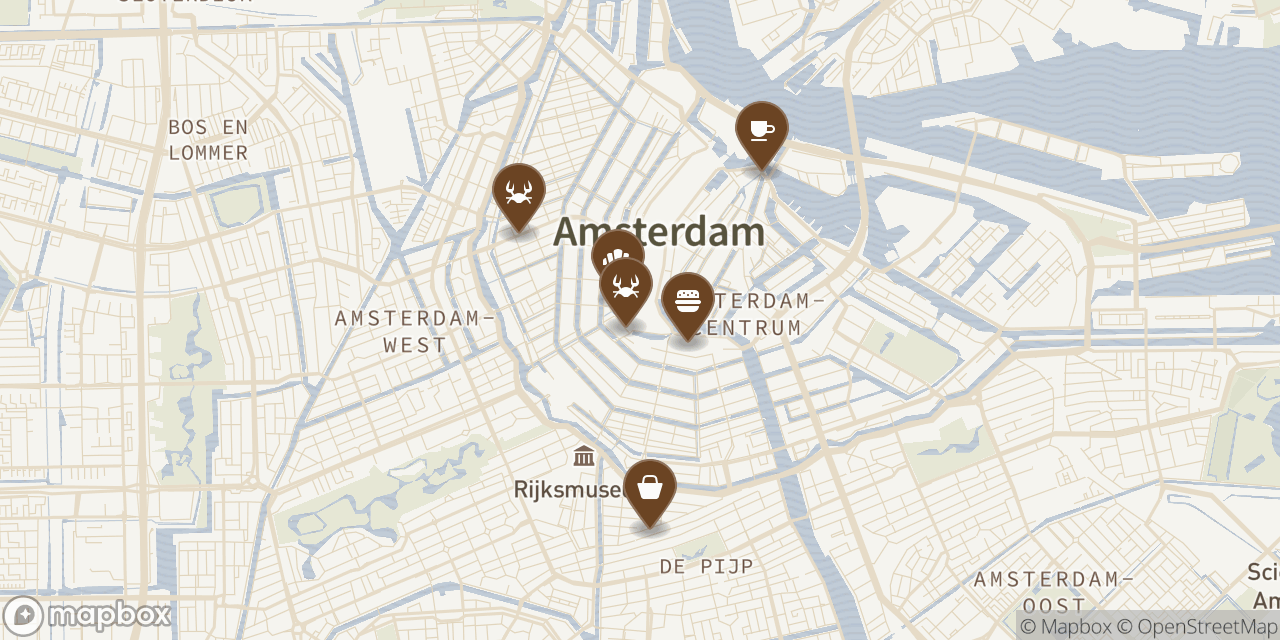
Points of Interest


Your Day Trip Timeline
Start at Van Stapele Koekmakerij for stroop cookies
Try the honey-filled stroop cookie first - crispy waffle texture with gooey caramel, perfect with coffee
Visit Vrienden Haringhandel for raw herring sandwich
Traditional marinated herring in soft bun with pickles, onions, and mustard-mayo spread - surprisingly delicious
Order kibbeling (fried cod) at same stand
Golden battered cod pieces with spiced coating - come back for seconds, it's that good
Book dinner at Pesca seafood restaurant
Choose fresh fish from their market display, work with chefs to build your meal
Find a brown café for Dutch craft beer
Skip Heineken - ask bartender for blonde, hoppy recommendations from 100+ Dutch brews available
Bar hop for jenever tasting experience
Traditional Dutch gin - sip without touching glass first, try both original and lemon honey varieties
Get fresh stroopwafel at Rudi's in Albert Cuyp Market
Made fresh off the grill - warm, gooey, and noticeably different from packaged versions
Try Indonesian food at modern fusion restaurant
Shrimp tempura and fried chicken with incredible sauce combinations - essential Amsterdam cuisine due to colonial history
Experience Febo snack bar and kroket wall
Get beef kroket with mustard, frikandel sausage with satay sauce, fries with peanut sauce and Dutch mayonnaise
Visit Café Schreierstoren tower for dessert
Historic 1487 defensive tower with beautiful canal views - try Dutch brownie with ice cream
Ben's Deep Dive
Amsterdam's culinary identity was forged through centuries of maritime trade and colonial expansion, creating a unique fusion where North Sea traditions meet Southeast Asian flavors in ways that continue to shape the city today.
To truly understand Amsterdam's food culture, you need to understand the water. The city's entire existence has been defined by its relationship with the sea—not just geographically, but economically and culturally. The herring trade alone legitimately funded the early Dutch Golden Age, as mentioned during our visit to Friens Haringhandel. Those seemingly simple raw herring sandwiches we tried aren't just street food; they're edible history. For centuries, Dutch fishing fleets dominated the North Sea, and the development of gibbing (a special gutting technique that preserved herring for long voyages) gave the Netherlands a massive competitive advantage in European trade. The pickled onions, the specific way the fish is marinated, even serving it in that soft American-style bun—these aren't random choices, but evolved traditions that made this protein accessible to working people in a country where the sea was both livelihood and constant threat. Walking through Amsterdam today, with its canals engineered to hold back water and facilitate trade, you're seeing a city that was quite literally built on fish. The kibbeling we devoured—that golden fried cod with its surprisingly spiced batter—represents this same maritime heritage translated into pure comfort food, the kind of thing fishermen and dockworkers would grab between shifts.
What makes Amsterdam's food scene so distinctively layered, though, is how colonial history created an entirely unexpected culinary landscape. The Indonesian food we encountered—those incredible peanut satay sauces at multiple restaurants, the rich curries, the bami goreng noodles literally encased in fried dough at Febo—didn't arrive through cultural exchange or immigration alone. The Netherlands colonized Indonesia brutally for over three centuries, and when that empire finally collapsed, the food, spices, and importantly the people came to Europe. Indonesian migrants and Dutch-Indonesian communities kept these culinary traditions alive in Amsterdam, adapting them, evolving them, making them part of the fabric of Dutch food culture over generations. Today, Indonesian cuisine is genuinely one of the most popular food categories in the entire country, found everywhere from high-end fusion restaurants to casual snack bars. That thick, earthy peanut sauce we kept dipping everything into at Febo? That's Indonesian satay adapted into Dutch snack culture. Those tofu skewers with yellow rice we had at the traditional Indonesian spot? They represent culinary heritage maintained by communities who made Amsterdam home, often under difficult circumstances. The colonial legacy is uncomfortable and impossible to ignore, but the food itself—shaped and preserved by the people who brought it here—deserves recognition and celebration on its own terms.
Then there's the unexpected sophistication hiding in Amsterdam's seemingly simple pleasures. The craft brewing culture we discovered goes far beyond Heineken's international reputation, with pubs pouring over a hundred different Dutch brews showcasing the country's deep brewing traditions. That blonde, complex beer the bartender crafted for me—somewhere between a Weißbier and something more secretive—represented centuries of Dutch brewing knowledge. Similarly, genever, which we sampled at that cozy pub with Mango the grumpy cat, isn't just Dutch gin's ancestor; it's an entirely different spirit with smoky, complex character that predates modern gin by centuries. Even the stroopwafels revealed unexpected depth: the difference between Rudi's fresh-from-the-griddle version at Albert Cuyp Market (impossibly gooey, 30% sweeter, dripping with warm caramel) and the crispy stroop cookies we tried earlier wasn't just texture—it was two different interpretations of the same tradition. The Dutch approach to beer, spirits, and even sweets shows a culture that values craft and specificity, even when the end result looks casual or accessible.
Perhaps the most magical discovery was how everyday Dutch food culture operates—the unpretentious, deeply local rituals that most visitors never experience. Pulling hot kroketten from Febo's automat walls, dipping them in mustard while standing around with locals doing exactly the same thing, felt like stumbling into an entirely different version of Amsterdam. These aren't tourist experiences; they're how Dutch people actually eat, where beef or vegetarian croquettes with their impossibly crunchy exteriors and creamy fillings satisfy cravings at any hour. The snack bar culture mixing multiple mayonnaises (that Brander mayonnaise from Groningen with its extra mustard and black pepper, the polarizing Zaanse version with more vinegar bite), combining them with Indonesian peanut sauce on simple fries—this is Amsterdam's real food soul. It's unpretentious, deeply satisfying, and completely unconcerned with impressing anyone. Even sitting in the Schreierstoren tower from 1487, eating brownies and ice cream while learning it was where sailors' wives came to cry as ships departed, connected food to place in ways museums never could. Amsterdam's food isn't trying to be anything other than what centuries of trade, immigration, adaptation, and local tradition have made it: utterly unique, occasionally unexpected, and consistently delicious.
Support Us
Plan Your Trip
Get personalized recommendations and custom itineraries for your Munich adventure. Whether you need help planning the perfect day trip, finding hidden gems, or creating a multi-day itinerary, we're here to make your Munich experience unforgettable.
| Consultation | Time |
|---|---|
| Quick Q&A | 20 min |
| Tailored Consultation | 45 min |
Join Our Tours
Experience Munich like a local with our personalized walking tours and full-day adventures! From hidden gems to local favorites, we'll show you the authentic side of Munich that most tourists miss.