Savor French-German fusion in medieval half-timbered villages
Taste legendary flammkuchen where it was born
Sip family-vineyard wines overlooking castle-dotted hills
Discover where even tourist-trap burgers taste gourmet
 1 Week duration
 Train transport
 Medium cost
 Easy difficulty
 Spring best time
 Self-guided guide
Why We Love This Trip
Interactive Map
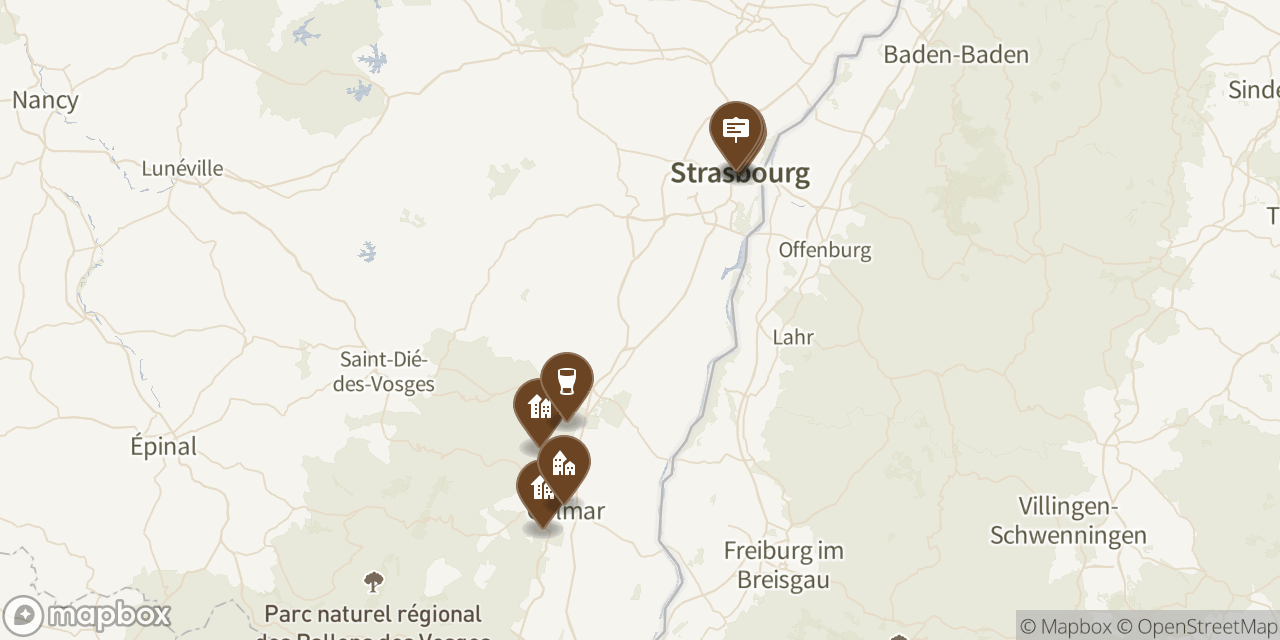
Points of Interest


Your Day Trip Timeline
Start in Strasbourg with specialty coffee
Visit local artisan coffee shop for quality brew - support independent businesses over chains
Lunch: Try kartoffelpuffer with cheese and bacon
Elevated potato pancakes far superior to German versions - expect gourmet ingredients and crispy perfection
Order spätzle with cream and mushroom sauce
Rustic egg noodles with rich, cheesy sauce - vegetarian-friendly twist on traditional Käsespätzle
Visit medieval town wall brewery for craft beer
Ask brewer for personalized recommendation - expect complex flavors, €3.90 for local craft beer
Explore smaller villages: Eguisheim, Riquewihr, Bergheim
Escape crowds in Strasbourg and Colmar for authentic experiences without English menus or guidebook tourists
Book flammkuchen dinner at Schatzi in Strasbourg
Traditional thin-crust tart with cream, onions, and meat - originated here as medieval test bread
Take bus to family-owned vineyard near Bergheim
Call ahead to confirm hours and language - bring cash, 20-minute walk through vineyards, German helpful
Order wine tasting flight at small vineyard
Try multiple varieties including sweet dessert wines - enjoy panoramic views of blooming fields and castle ruins
Have quiche Lorraine for lunch in Colmar
Classic ham, bacon, cheese and perfectly cooked eggs in pastry - comes with fresh salad
Test quality at touristy restaurant in Petite France
Even tourist spots serve gourmet burgers with rosemary potatoes - French food quality consistently excellent
Pick up pastries from local bakery for dessert
Lemon tart and chocolate eclair recommended - find scenic canal spot to enjoy your treats
Ben's Deep Dive
The Alsace region's unique culinary identity wasn't born from culinary ambition, but from centuries of territorial ping-pong between two European powers—and that tumultuous history created something neither France nor Germany could have achieved alone.
Understanding Alsace's food scene requires understanding its rather complicated past. This border region has changed hands between France and Germany so many times that locals joke about their grandparents switching nationalities without ever leaving their village. After the Franco-Prussian War of 1870, Alsace became German territory, remaining so until World War I returned it to France in 1918. Then came World War II, when Germany annexed it again from 1940-1945, before France reclaimed it permanently. This wasn't just political shuffling on a map—each transition brought language shifts, cultural adjustments, and culinary evolution. The result is a region where kartoffelpuffer sit comfortably beside quiche Lorraine on menus, where restaurants serve both German beer and French wine, and where the local dialect mixes French and German so thoroughly that even native speakers from either country struggle to follow along. What makes this particularly special for food lovers is that Alsace didn't just adopt dishes from both cultures—it perfected them with French technique and German heartiness.
The medieval origins of flammkuchen perfectly illustrate this cultural fusion. Dating back to the Middle Ages, this dish began as a practical solution to a serious problem: medieval bakers needed to test their wood-fired oven temperatures before committing expensive ingredients to full bread production. A thin layer of dough topped with minimal ingredients—just cream, onions, and whatever meat scraps were available—served as the perfect test. If it burned, the oven was too hot. If it took too long, more wood was needed. But if it emerged perfectly crispy with edges slightly charred and toppings bubbling, the oven was ready for serious baking. What's remarkable is that this test bread became so beloved that it evolved into Alsace's signature dish, now served in variations ranging from traditional bacon and onion to gourmet combinations with goat cheese, honey, and walnuts. The fact that many people assume flammkuchen is German—when it actually originated on the French side of the Rhine in Strasbourg—speaks volumes about how thoroughly blended this region's identity has become. Christmas markets throughout Germany now serve it as a staple, never realizing they're serving French cuisine.
What elevates Alsace beyond mere cultural novelty is the region's unwavering commitment to locally-sourced, quality ingredients. Restaurants proudly display the origins of their wheat, family-owned vineyards dot the countryside offering tastings with views of castle ruins, and even establishments in heavily touristed areas maintain standards that would make a cheeseburger with rosemary-garlic roasted potatoes seem normal. This isn't accidental—it's the French culinary philosophy applied to German comfort food. The spätzle isn't just egg noodles; it's egg noodles in cream sauce so rich it borders on excessive, loaded with fresh mushrooms and local cheese. The quiche Lorraine isn't just eggs and bacon in pastry; it's farm-fresh eggs cooked to perfect custardy texture, quality ham precisely salted to cut through rich cheese, all wrapped in butter pastry that shatters delicately. Even craft beer purchased through medieval vague beer windows reveals complexity far beyond Bavaria's strict Reinheitsgebot purity laws, with brewers creating balanced blends that showcase wheat varieties and brewing techniques impossible under Germany's famous four-ingredient restriction.
Perhaps most telling is how this quality extends beyond the obvious tourist destinations of Strasbourg and Colmar into villages like Bergheim, Riquewihr, and Eguisheim—places where restaurant menus haven't been translated to English and family-owned vineyards require phone calls to confirm language requirements. These aren't locations trying to impress international food critics or compete for Michelin stars. They're simply maintaining centuries-old traditions of treating food with the respect it deserves, whether that's a kartoffelpuffer elevated with impossibly crispy bacon and exceptional cheese, or pastries from local bakeries that turn a simple lemon tart into something worth savoring beside a canal in blooming countryside. The region's 800-year-old half-timbered buildings, medieval walls complete with beer windows, and pedestrian-friendly cobblestone streets create an atmosphere where grabbing quality food and finding somewhere beautiful to enjoy it isn't just possible—it's the entire point of being there.
Support Us
Plan Your Trip
Get personalized recommendations and custom itineraries for your Munich adventure. Whether you need help planning the perfect day trip, finding hidden gems, or creating a multi-day itinerary, we're here to make your Munich experience unforgettable.
| Consultation | Time |
|---|---|
| Quick Q&A | 20 min |
| Tailored Consultation | 45 min |
Join Our Tours
Experience Munich like a local with our personalized walking tours and full-day adventures! From hidden gems to local favorites, we'll show you the authentic side of Munich that most tourists miss.